
Overview
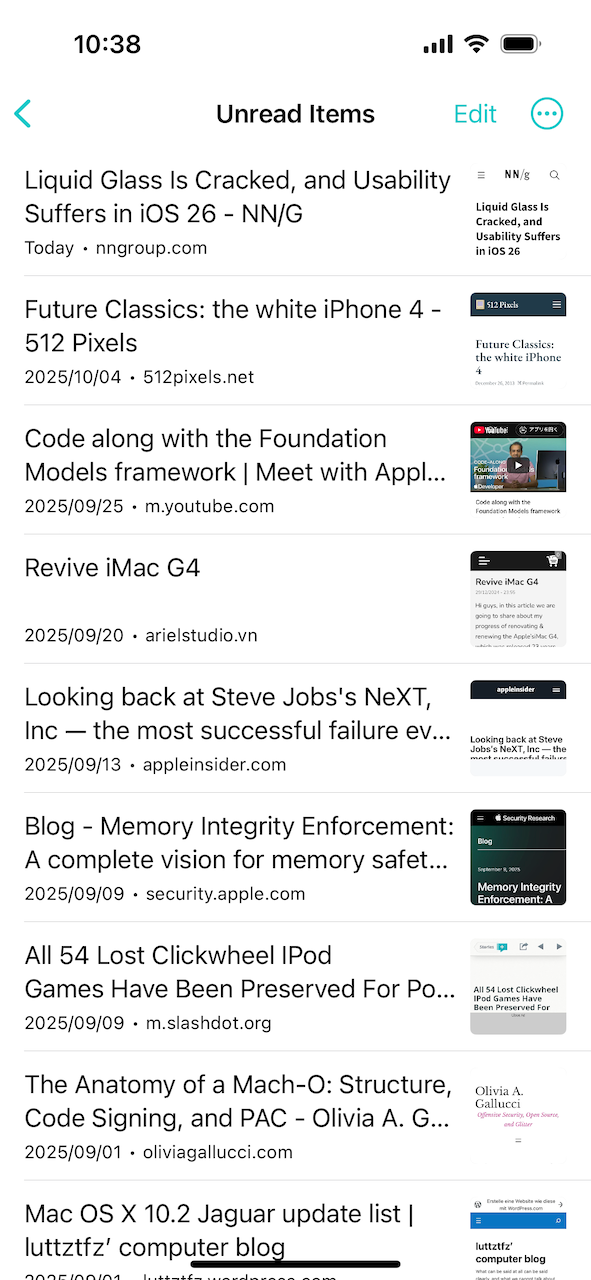
Hipstapaper is an app I built for myself to save links to web pages similar to Instapaper, which was popular in the early 2010s or so. But as Instapaper was losing traction, I didn’t want to lose the functionality.
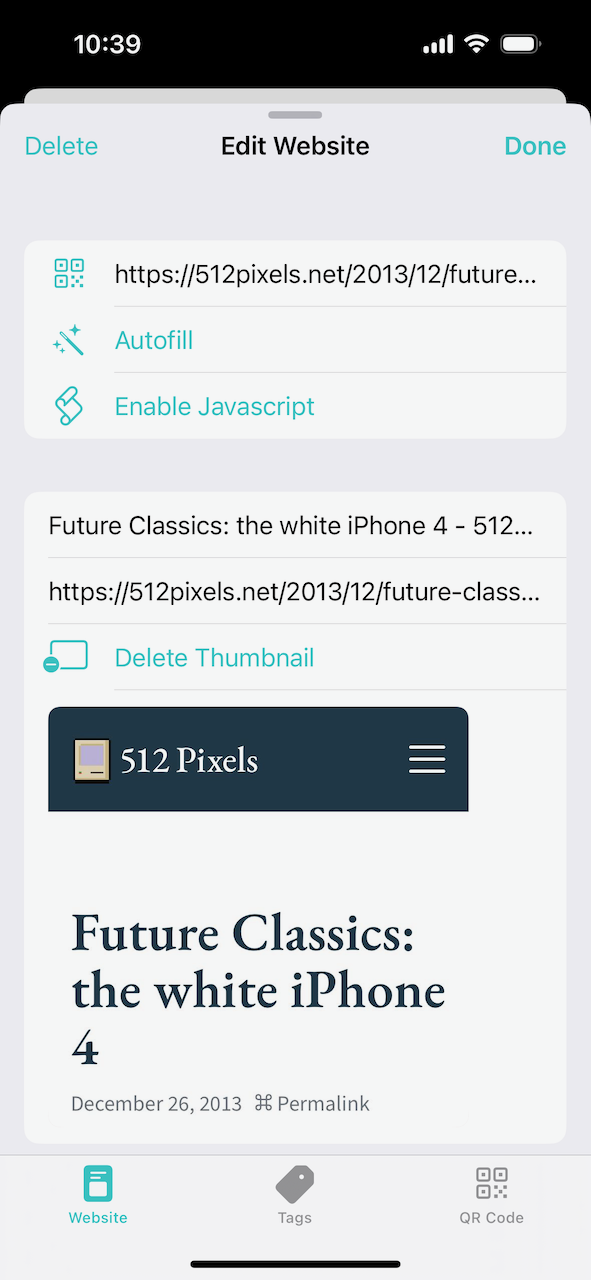
- Basic CRUD management of websites
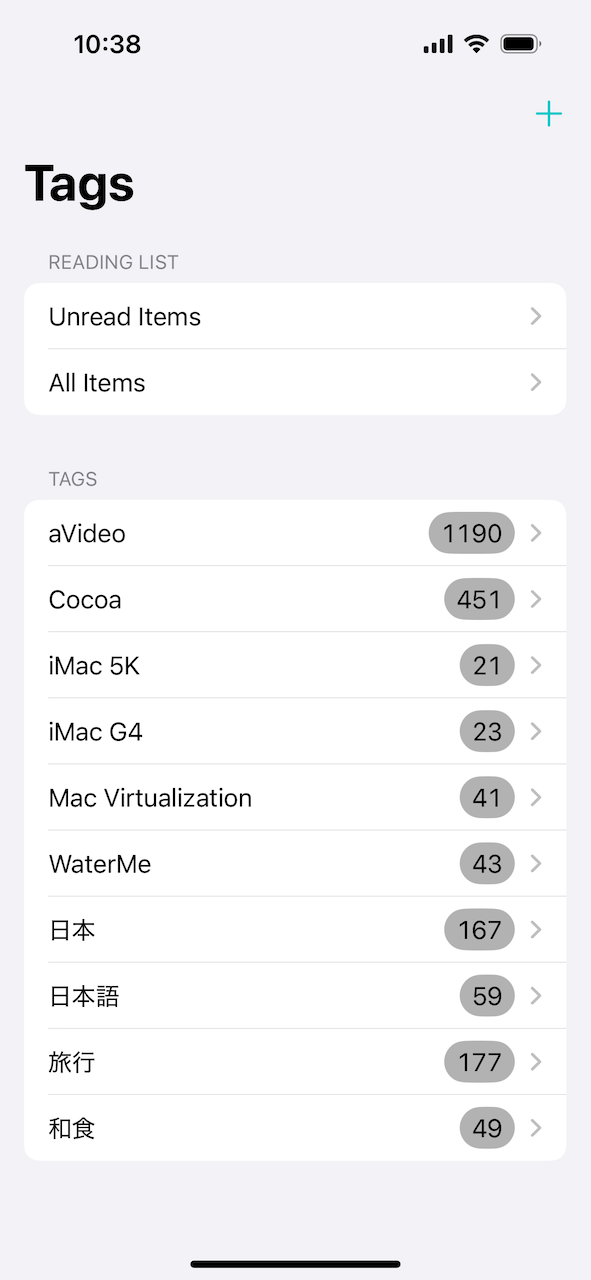
- Tagging, Filtering, Sorting
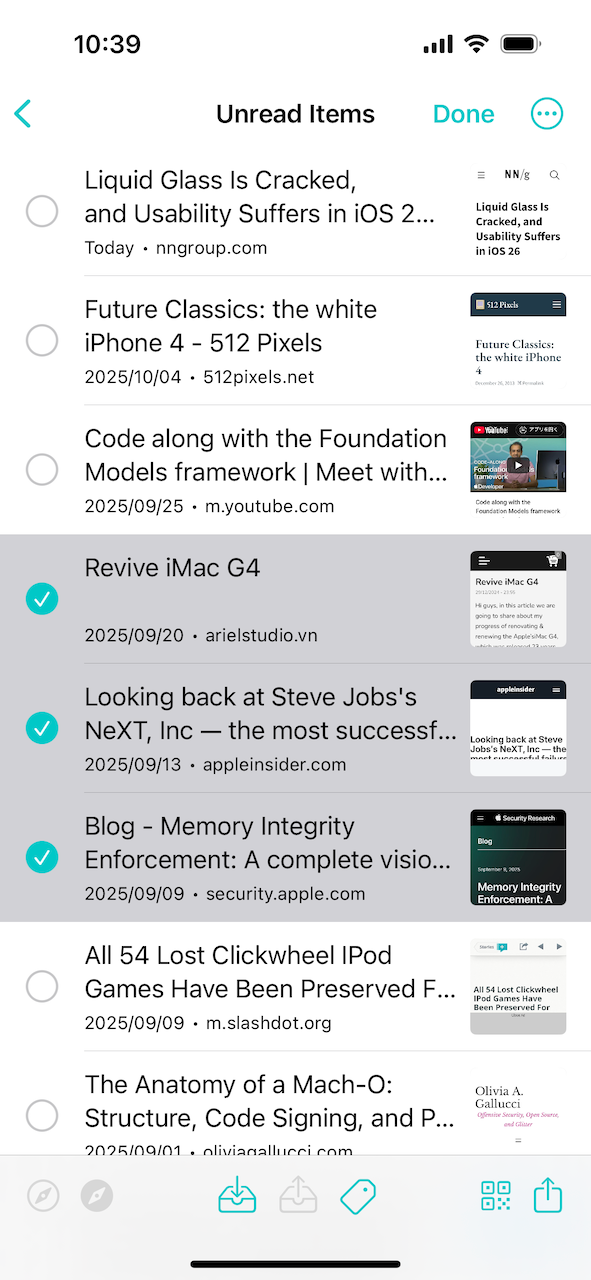
- Bulk editing
- State restoration
- iPadOS and macOS Menus
- iPadOS and macOS “Scenes” for multiple window support
- Share extension for adding content
- iCloud Sync
Download
I never released Hipstapaper on the App Store but you can always use Hipstapaper on your iOS and macOS devices using the links below:
Table of Contents
Development
Hipstapaper was a learning exercise. I wanted to learn how to make a cross-platform application that worked on all of Apple’s platforms, including macOS. This was a big learning opportunity as I had never made an AppKit-based app before. The TL;DR is that I ended up liking AppKit even more than UIKit and most of the toy apps I make now are either AppKit or SwiftUI.
Phase 1 (2016-2018)
During this phase, there were no cross-platform UI frameworks from Apple and there was no database that had online syncing from Apple. Thus, the technologies I chose were not ideal, but they were the only way to get the job done:
- Cross-Platform: UIKit and AppKit UI implementations
- Two UI implementations meant everything had to be implemented and updated twice. This was a big pain
- Realm Database: Realm featured powerful sync capabilities that iCloud could
not match
- Realm was a great database, but it was not the platform standard “Core Data”
- Realm Sync Server: Realm-powered server running in Digital Ocean
- Running my own server meant that I would never be able to support users for free. So this kept the app limited to my own personal use.
Phase 2 (2019-2021)
In WWDC 2019, Apple introduced Core Data syncing via CloudKit. While Apple pitched this as their final solution to Core Data syncing, the actual session video they published was so quick and so information-dense that it was hard to follow. As well, the feature has fundamental limitations, that I think have prevented it from being very successful.
But with the introduction of Core Data syncing, I worked on Hipstapaper to swap out Realm for Core Data. This was no easy task as I had not wrapped Realm in its own wrapper and Realm headers and tokens needed to be removed from hundreds of UI files… twice for UIKit and AppKit.
Phase 3 (2022-Current)
I wanted to learn SwiftUI and because SwiftUI was finally becoming full-featured enough to support apps with complex navigation for both iOS and macOS, I decided to take on the challenge. This required significant updates to the database wrapper to support SwiftUI’s dynamic data model. However, it worked. I was able to delete thousands of lines of platform-specific UI code and replace it with just one SwiftUI codebase. As well, I learned to love SwiftUI. If you can figure out how to let go and let the data drive your application, SwiftUI is simply amazing. The way it dynamically updates when there are literally hundreds of database changes happening every second (such as during a sync operation) is incredible. SwiftUI is truly a game changer.
Current Status
I still use Hipstapaper across my devices daily. However, I have never put it on the App Store or anything like that as I know it is missing key features that people will want such as offline reading of web pages. Yes, the link to the web page is stored offline in the database, but to actually open the web page you will need an internet connection.